
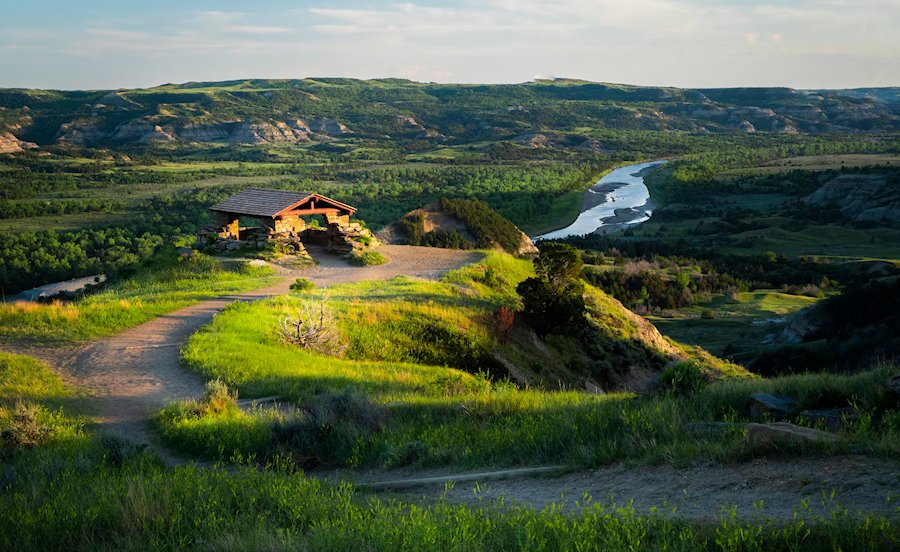
North Dakota often defies the expectations of those who view the Great Plains as merely a landscape to traverse quickly. Instead, the state offers a rugged, quiet grandeur that rewards those who linger. Whether you are interested in the geological drama of the west or the rich historical tapestry of the east, finding the best places to go in North Dakota requires looking beyond the standard guidebooks to discover a region defined by its authenticity.The Rugged Beauty of the Badlands
The western portion of the state is dominated by the dramatic topography of Theodore Roosevelt National Park. This landscape, carved by centuries of wind and water, reveals colorful sedimentary strata that shift in hue throughout the day. It is widely considered one of the primary North Dakota tourist attractions for those seeking the raw beauty of the American West.
Visitors can explore the scenic loops in both the North and South Units, which provide intimate access to jagged buttes and deep canyons. These regions serve as a sanctuary for wildlife, including bison, feral horses, and prairie dog towns. For the best experience, hiking the more remote backcountry trails allows travelers to grasp the scale of the landscape, providing views that have remained largely unchanged since the era of early exploration.Historical Significance and Cultural Heritage
Beyond the striking geography, the state’s identity is deeply rooted in the history of the Northern Plains. For those compiling a list of the best places to go in North Dakota, historical sites provide a necessary narrative focused on pioneer life, military history, and indigenous heritage.
- Indigenous Legacy: Sites along the Missouri River offer insight into the earth lodge villages of the Mandan, Hidatsa, and Arikara Nations. Engaging with these interpretation centers allows visitors to appreciate the sophistication of indigenous agricultural and social structures that predate European settlement.
- Frontier History: Fort Abraham Lincoln State Park is an essential stop, featuring reconstructed barracks and the Custer House. These sites serve as physical markers of the westward expansion, offering a nuanced view of the daily struggles faced by early settlers.
Natural Wonders and Quiet Retreats
The central and eastern portions of the state offer a different narrative defined by ancient glaciers, wetlands, and vast prairies. These regions are home to several North Dakota tourist attractions that rank high for those interested in birdwatching and tranquil recreation.
The J. Clark Salyer National Wildlife Refuge provides a vital habitat for waterfowl, offering serene opportunities for kayaking and photography. Further west, Lake Sakakawea—one of the largest man-made reservoirs in the United States—provides endless miles of shoreline for boating, fishing, and camping. The sheer scale of these water bodies creates a sense of peace that stands in stark contrast to the dramatic relief of the badlands.Practical Tips for Your Journey
Planning a trip through a state defined by such vast distances requires logistical preparation. The travel time between major points of interest can be significant, so building in extra time for scenic drives is highly recommended.
- Seasonal Timing: While summer is the most popular time for tourism, late September offers a transition into a golden season where the grasses turn amber and the air is crisp. Winter provides a serene, crystalline beauty, though it requires specific preparation for cold-weather travel.
- Engage Locally: Rather than relying solely on global travel apps, seek out information from local chambers of commerce or regional visitor centers. These entities often provide the most accurate, up-to-date information on seasonal events and hidden gems.
- Practice Stewardship: Whether visiting a national park or a local municipal space, following “leave no trace” principles ensures that these unique environments remain available for future generations.
Traveling through this part of the country is about the rhythm of the road and the quietude of the horizon. By approaching the state with curiosity and respect, you will find that it offers a rare opportunity to disconnect from the frantic pace of modern life and reconnect with the vastness of the natural world.
About the Author


